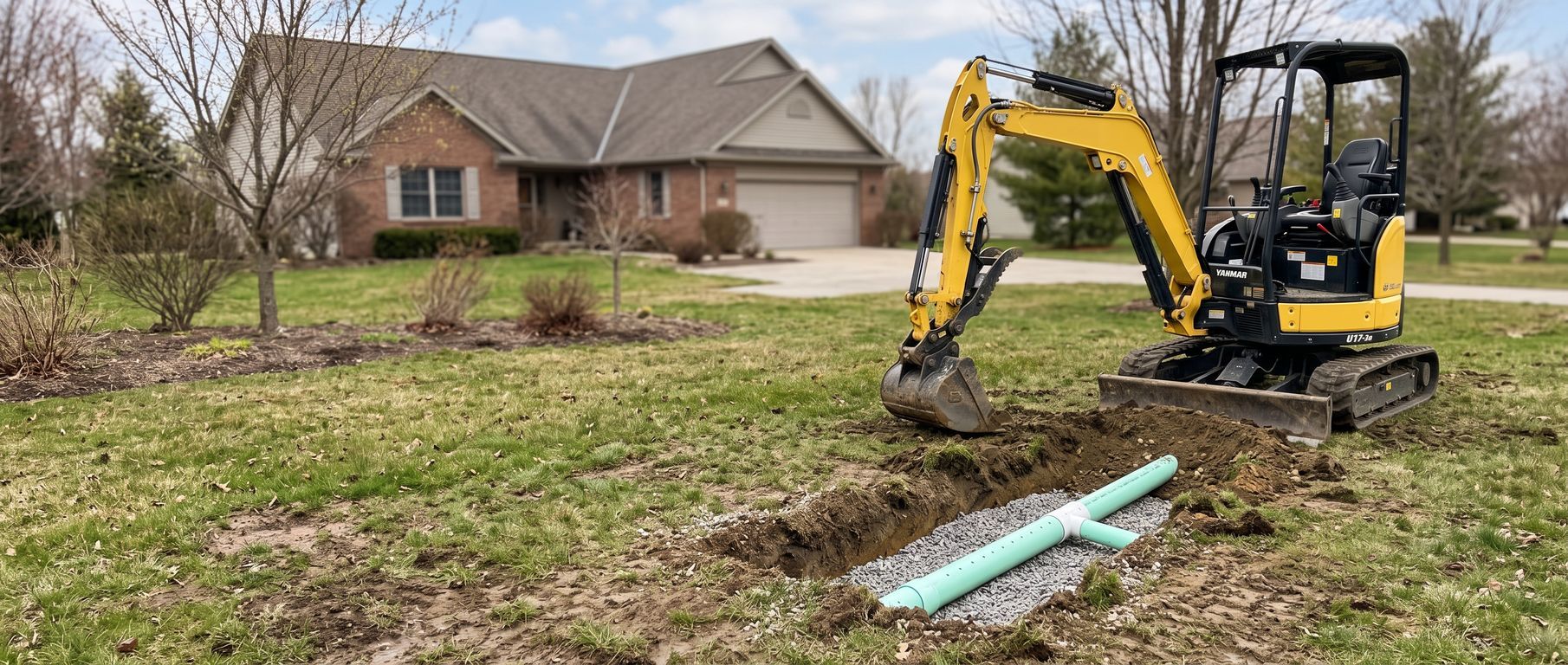
Spring Equipment Maintenance Checklist — Getting Your Fleet Ready After Winter
Spring is go-time for excavation contractors, and the last thing you need is a machine going down on Day One because it sat idle through the winter. At Precision Dig Excavation, a thorough pre-season maintenance routine is one of the first things we complete every year — because it protects our investment, keeps our crew safe, and prevents costly mid-project breakdowns.
Hydraulic Systems
Start with your hydraulic lines, fittings, and cylinders. Cold weather causes seals to contract and crack, and hoses can become brittle over months of inactivity. Look for any signs of leaking fluid, soft spots on hoses, or corrosion around fittings. Replace any suspect components before they fail under load.
Check hydraulic fluid levels and quality. If fluid looks cloudy, dark, or has visible particles, it's time for a change. Contaminated hydraulic fluid is one of the top causes of pump failure in excavators.
Undercarriage Inspection
The undercarriage accounts for a significant percentage of your total machine maintenance costs. Inspect track tension, look for worn or missing bolts, and check for cracks in the track pads. Measure pin and bushing wear — if you're close to service limits, it's better to address it now than to lose a track mid-dig.
For wheeled equipment, check tire pressure, tread depth, and sidewall condition. Winter storage on cold concrete can cause flat spots that may or may not work themselves out.
Fluids and Filters
- Engine oil and filter — Change both, even if you did it before storage. Condensation can contaminate oil sitting in a cold engine.
- Coolant — Test antifreeze concentration and top off. Flush if it's been more than two years.
- Fuel — If equipment sat with fuel in the tank, check for water contamination and consider adding a fuel stabilizer or draining and refilling.
- DEF (Diesel Exhaust Fluid) — DEF can degrade over time, especially in temperature swings. Top off with fresh fluid.
Electrical Systems
Batteries are the most common winter casualty. Load-test every battery, clean terminals, and check cable connections. Inspect wiring harnesses for rodent damage — mice love to nest in idle equipment.
Test all lights, strobes, backup alarms, and camera systems. These are safety-critical and often overlooked.
Attachments and Buckets
Inspect bucket teeth and cutting edges for wear. Dull or missing teeth slow production and increase fuel consumption. Check quick-coupler pins and locks to ensure attachments seat properly and securely.
Greasing and Lubrication
Hit every grease point on every machine. Joints that sat dry through the winter are joints that wear fast. Refer to your operator's manual for the full list of service points — most excavators have 15 to 20 or more.
Create a Checklist and Assign Ownership
Don't leave pre-season maintenance to chance. Build a written checklist for each machine and assign a crew member to complete and sign off on it. Document everything — it protects you for warranty claims and demonstrates due diligence if there's ever an incident.
The bottom line: A day or two of thorough maintenance now can save you weeks of downtime during your busiest and most profitable months. Treat spring prep like an investment, not a chore.
You might also like