
How Spring Thaw Conditions Affect Excavation Timelines
April 22, 2026
The body content of your post goes here. To edit this text, click on it and delete this default text and start typing your own or paste your own from a different source.
You might also like
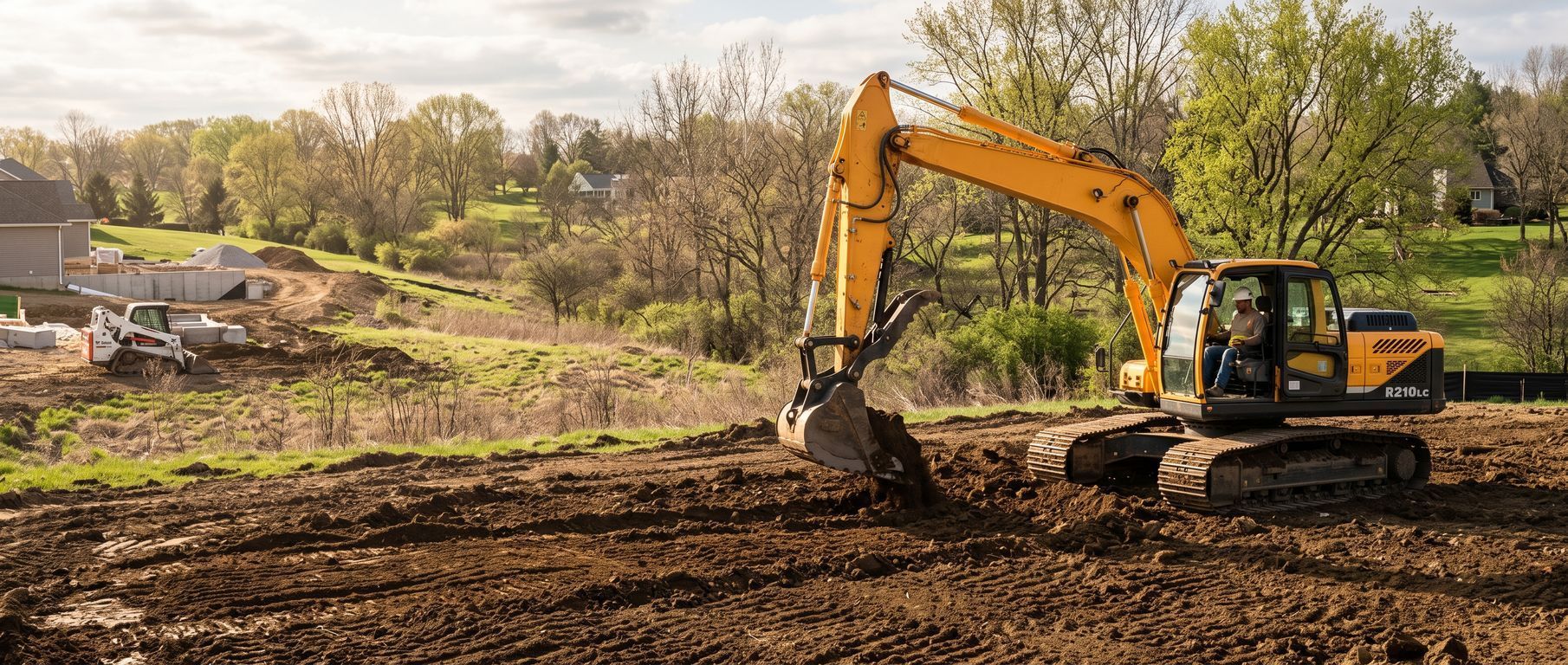
For excavation contractors, spring is when the year is won or lost. The jobs you book (and how you manage them) between March and June set the tone for your entire revenue year. At Precision Dig Excavation , we've learned that a packed spring calendar doesn't happen by accident — it's the result of deliberate winter preparation and disciplined scheduling. Here's how we approach it. Start Filling the Pipeline in Winter If you're waiting until spring to market, you're already behind. The most successful excavation businesses use the slow winter months to: Follow up with past clients who mentioned future projects. Reach out to general contractors and builders who will need excavation work in spring. Run targeted online ads for seasonal services (septic, land clearing, grading). Update their website and Google Business Profile with fresh content and photos. By the time March rolls around, your calendar should already have a healthy base of confirmed work. Qualify Leads Before You Quote Not every inquiry is a good fit. Asking the right questions upfront saves hours of wasted estimating time: What's the scope and timeline? Is the project permitted or in the permitting process? Is financing in place? Have they gotten other estimates? (This tells you how serious they are and where you stand competitively.) Prioritize leads that are ready to go — permitted, funded, and decisive. Use Deposits to Lock In Commitments A signed contract without a deposit is just a conversation. Requiring a deposit (even a modest one) to reserve a spot on your calendar accomplishes several things: It confirms the client is serious. It reduces no-shows and last-minute cancellations. It provides working capital for mobilization costs. It gives you confidence to turn away lower-priority work. Schedule Strategically Not all jobs are created equal. When building your spring calendar: Cluster jobs geographically to minimize travel time and mobilization costs. Sequence weather-sensitive work carefully — schedule drainage and grading work during drier windows and plan indoor or covered tasks for rainy stretches. Build in buffer days. Weather delays will happen. A schedule with zero margin is a schedule that falls apart. Communicate timelines clearly to every client. Underpromise and overdeliver. Manage Capacity, Not Just Volume Booking every job that comes your way sounds great until your crews are stretched thin, quality drops, and clients start complaining. Know your capacity — how many crews, machines, and hours you can sustain — and price accordingly. It's better to be fully booked at profitable rates than overbooked at breakeven. Keep the Funnel Open Even when spring is full, keep marketing. The work you generate now feeds your summer and fall calendar. Consistent visibility — through SEO, social media, referrals, and follow-up — means you're never scrambling for the next job. The bottom line: Treat your calendar like the revenue tool it is. Winter preparation, smart lead qualification, strategic scheduling, and disciplined capacity management are what separate contractors who thrive from those who just survive.
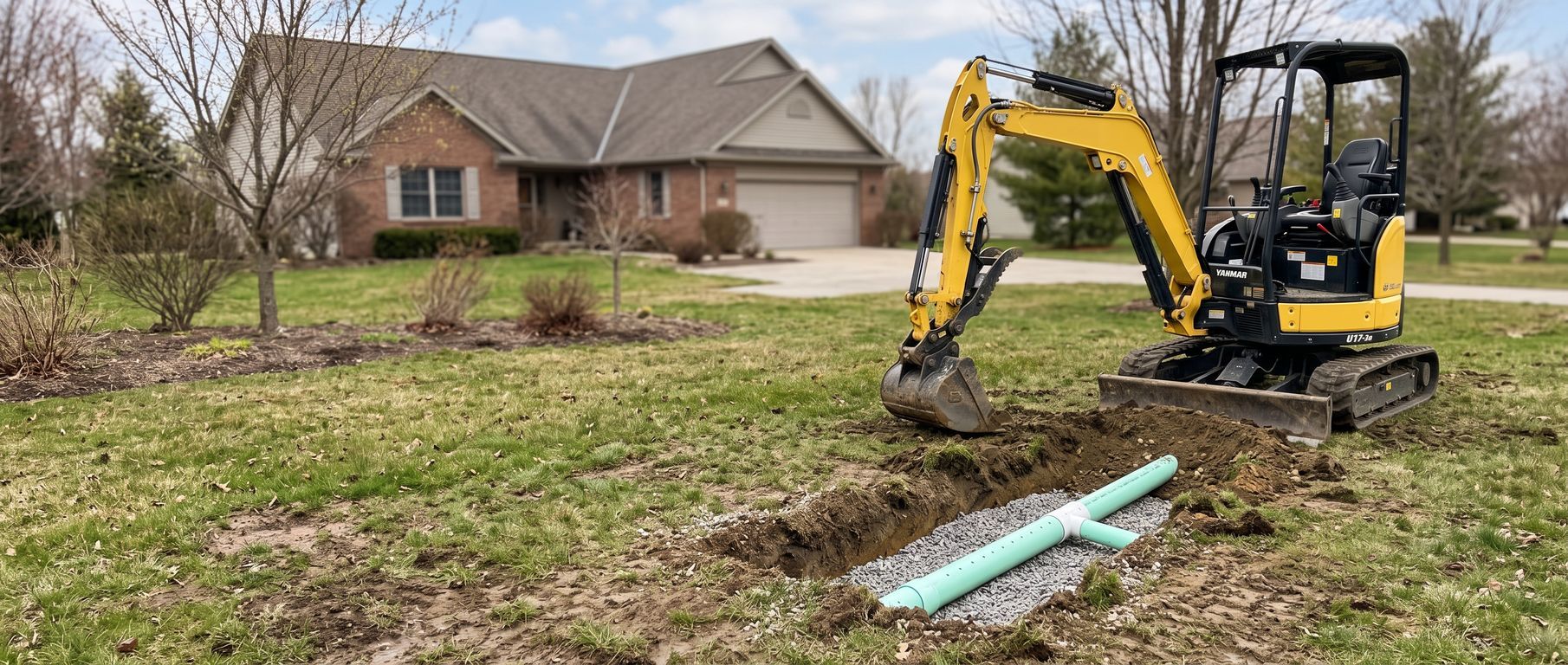
Spring is tough on septic systems. The ground is saturated, water tables rise, and systems that were barely keeping up through the year can fail when conditions shift. Precision Dig Excavation handles septic-related excavation work year-round, but spring is when our phone rings the most. Here's how to spot trouble early — and when to call in a contractor. Why Spring Stresses Septic Systems A septic system depends on the drain field (also called a leach field) to absorb and filter effluent from the tank. In spring, the soil around the drain field is already full of water from snowmelt and rain. That means the system has less capacity to do its job. If your system was marginal to begin with — due to age, undersizing, or soil conditions — spring is when it shows. Warning Signs to Watch For Slow drains throughout the house — If every sink, shower, and toilet is draining sluggishly, the issue is likely at the septic level, not in your interior plumbing. Sewage odor in the yard — A sulfur or sewage smell near the tank or drain field area is a clear sign that effluent isn't being properly absorbed. Standing water or unusually green grass over the drain field — Effluent surfacing is a health hazard and a sign the system is overwhelmed. Sewage backup into the home — The most urgent sign. If wastewater is coming back into your lowest drains, the system is failing. Gurgling sounds in plumbing — This can indicate a full tank or a blockage between the house and the tank. When Pumping Isn't Enough A septic pump-out is basic maintenance, and it may temporarily relieve symptoms. But if the problem is in the drain field — crushed pipes, root intrusion, bio-mat clogging, or a failed soil absorption area — pumping the tank is just a band-aid. This is where excavation comes in. Excavation-Level Septic Work Drain field replacement — Installing a new set of distribution pipes and absorption trenches. This requires significant excavation, new stone, and pipe. Tank replacement — Older concrete tanks can crack, collapse, or lose structural integrity. Excavating and replacing the tank is a major project but sometimes necessary. System relocation — If the existing drain field site has failed due to soil conditions or water table issues, a new location on the property may be needed. Pump chamber or dosing system installation — Upgrading a gravity system to a pressure-dosed system requires excavation to install a pump chamber and new distribution network. D-box (distribution box) repair or replacement — The distribution box divides effluent evenly among drain field lines. If it's damaged or tilted, the field won't function properly. Permitting and Inspections Septic work almost always requires a permit from your local or county health department. A soil evaluation (perc test) may be required for new drain field installations. Your excavation contractor should be experienced with the permitting process in your area and coordinate inspections at each required stage. The bottom line: Don't ignore spring septic warning signs. A failing system won't fix itself — and the longer you wait, the more expensive and disruptive the repair. Catching it early in spring gives you the full construction season to get it resolved before winter.
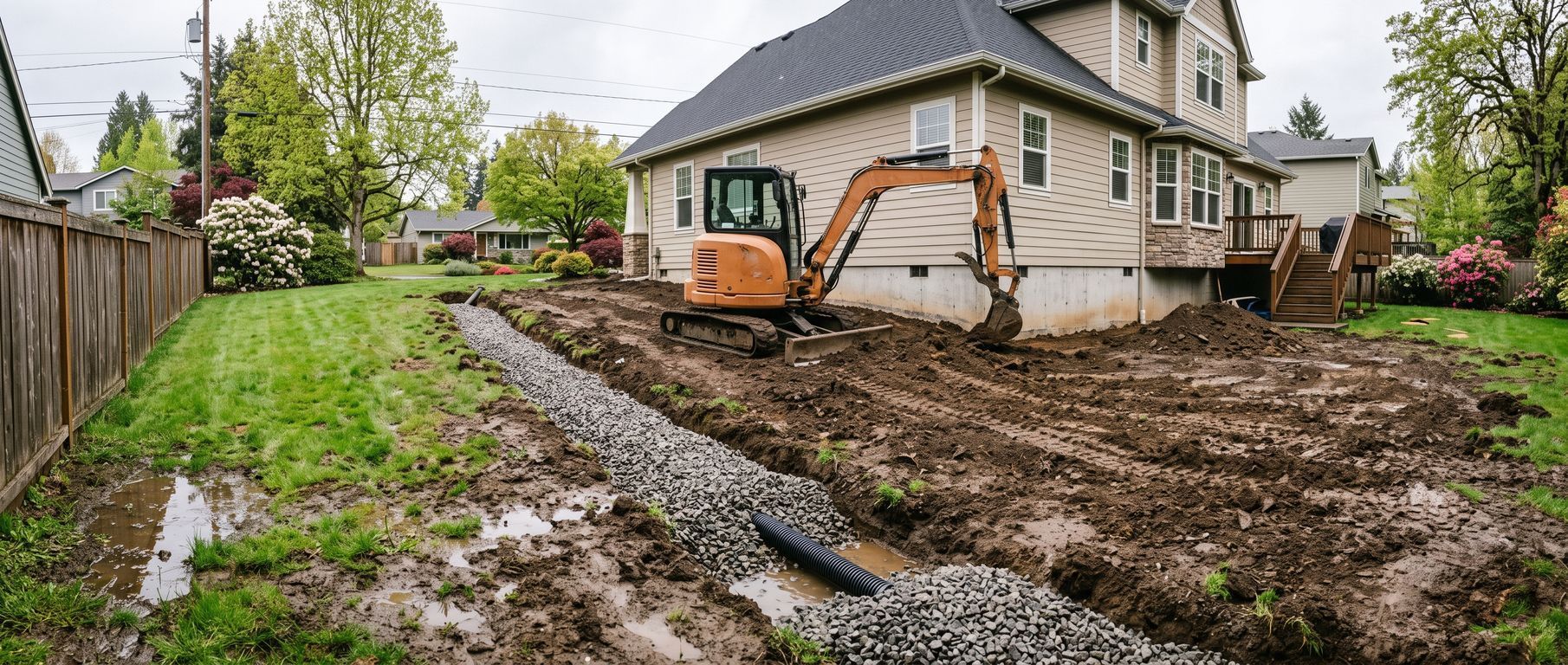
Spring is when water problems reveal themselves. Snowmelt, heavy rains, and saturated ground expose every weakness in your property's drainage — water pooling against foundations, soggy yards, flooded basements, and erosion along slopes. The good news: most of these problems are fixable with proper grading and drainage work. It's one of the most common calls Precision Dig Excavation receives every spring. Why Grading Matters Grading is the slope of the ground around your home or building. When grading is done correctly, water flows away from structures and toward designated drainage areas — swales, ditches, storm drains, or dry wells. When grading is wrong, water flows toward your foundation, and the consequences range from annoying (perpetually wet basement) to catastrophic (structural damage and mold). The general rule of thumb is a minimum of six inches of fall over the first ten feet away from a foundation. Many properties — especially older ones — have settled over time and no longer meet this standard. Common Spring Drainage Problems Negative grading — The ground slopes toward the building instead of away from it, often due to soil settlement or poorly placed landscaping. Downspout discharge too close to the foundation — Gutters collect a huge volume of water. If downspouts dump it right next to the house, you're creating your own flood. Blocked or nonexistent swales — Swales are shallow channels designed to direct surface water. They get filled in over time by landscaping, sod, or settling. High water table — In some areas, the spring water table rises high enough to push water up through basement floors and into crawlspaces. This requires more aggressive solutions. Compacted soil — Heavy clay soil or areas compacted by foot traffic and vehicles don't absorb water well, leading to pooling and runoff. Solutions an Excavation Contractor Can Provide Regrading — Reshaping the ground surface around your home to restore proper slope. This is often the simplest and most cost-effective fix. French drains — A perforated pipe buried in a gravel-filled trench that collects subsurface water and redirects it away from problem areas. Curtain drains — Similar to French drains but designed to intercept groundwater moving laterally through a slope before it reaches your home. Swale construction — Grading shallow channels to direct surface water to appropriate outlets. Dry wells — Underground chambers that collect runoff and allow it to percolate slowly into the soil. Downspout extensions and underground piping — Routing gutter discharge well away from the foundation through buried PVC or corrugated pipe. When to Act If you see water problems in spring, don't wait until fall to fix them. The issue will only worsen as seasons cycle. Spring is actually an excellent time to do drainage work because you can observe the problem in real time and verify that the solution works before the contractor leaves. The bottom line: Water is the number-one enemy of buildings and foundations. A few hours of excavation work to correct grading and drainage can prevent tens of thousands of dollars in water damage. If your yard turns into a lake every spring, give Precision Dig Excavation a call — it's one of the most impactful fixes we do.