Muddy Jobsites — Best Practices for Working in Wet Spring Soil
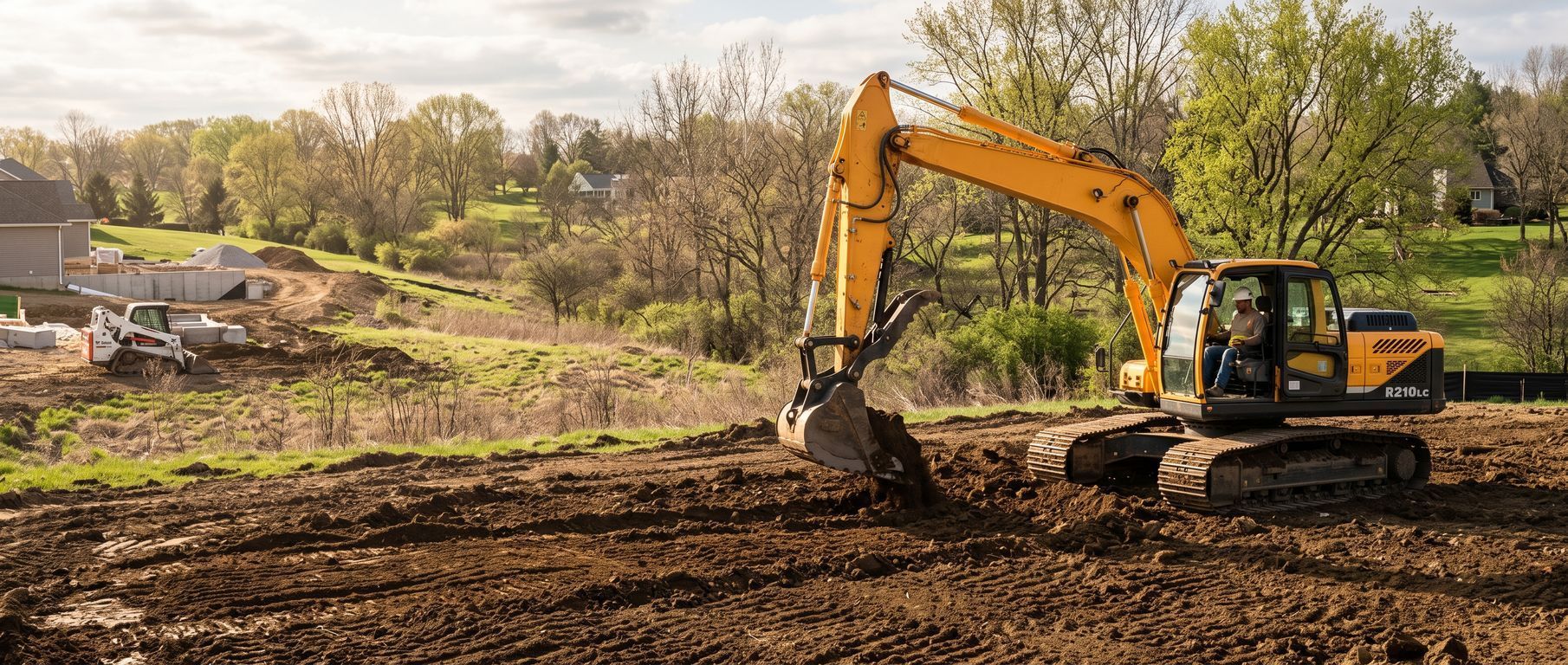
Mud is the defining challenge of spring excavation. It slows production, damages equipment, creates safety hazards, and can compromise the quality of finished work. At Precision Dig Excavation, we don't just accept mud — we manage it.
Understanding the Problem
Wet soil behaves differently than dry soil in almost every way that matters to excavation. It's heavier, stickier, less stable, and harder to compact. Equipment sinks, trenches collapse, spoil piles turn into slurry, and haul roads become impassable. Left unmanaged, a muddy jobsite can turn a three-day project into a two-week ordeal.
Site Access and Stabilization
The first priority is maintaining access to and across the site.
- Timber mats or composite mats distribute equipment weight across a larger area and prevent machines from sinking. They're an added cost but can pay for themselves in saved time and reduced site damage.
- Geotextile fabric laid beneath gravel access roads keeps stone from migrating into soft subsoil.
- Gravel pads at entry points give trucks and equipment a stable surface to load and unload.
- Designated haul routes prevent the entire site from getting chewed up. Restrict traffic to specific paths and reinforce them as needed.
Drainage Control
Water management is the single most effective thing you can do on a muddy site.
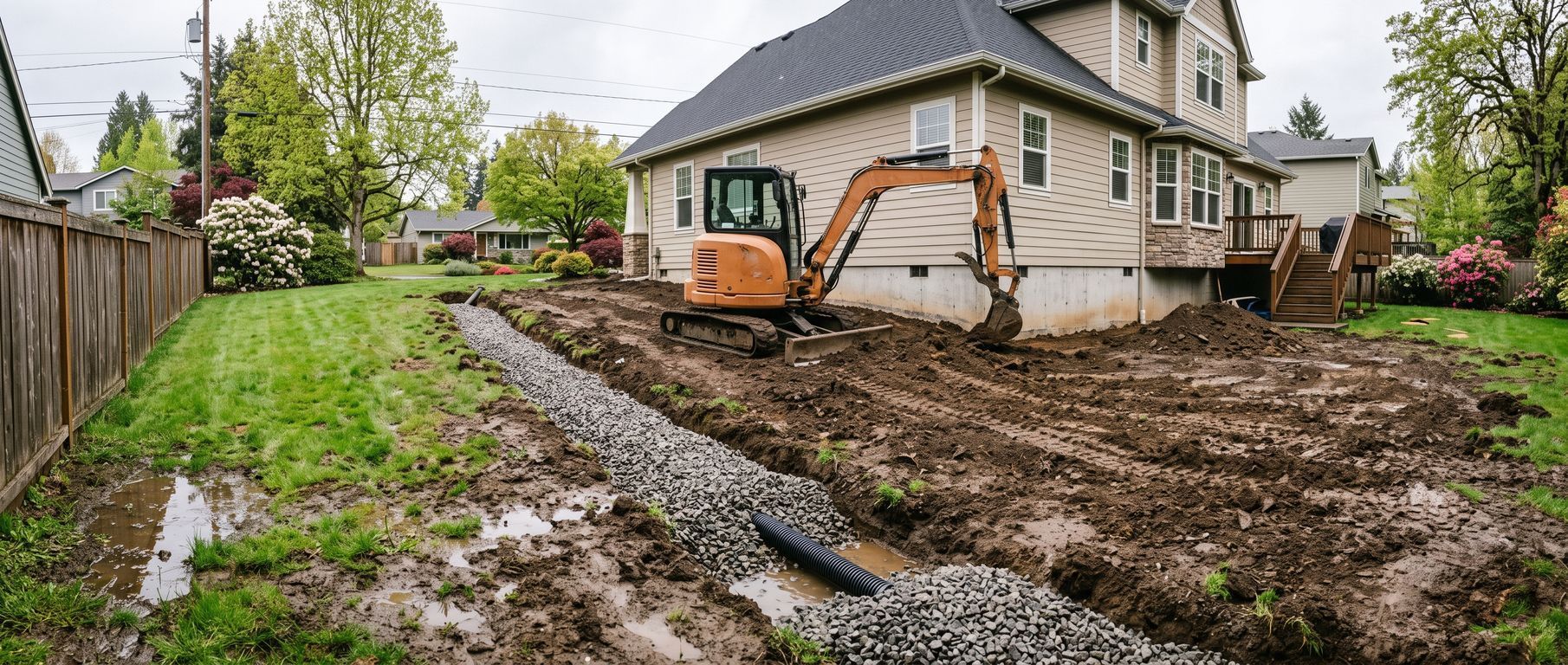
- Diversion ditches route surface water away from the active work area.
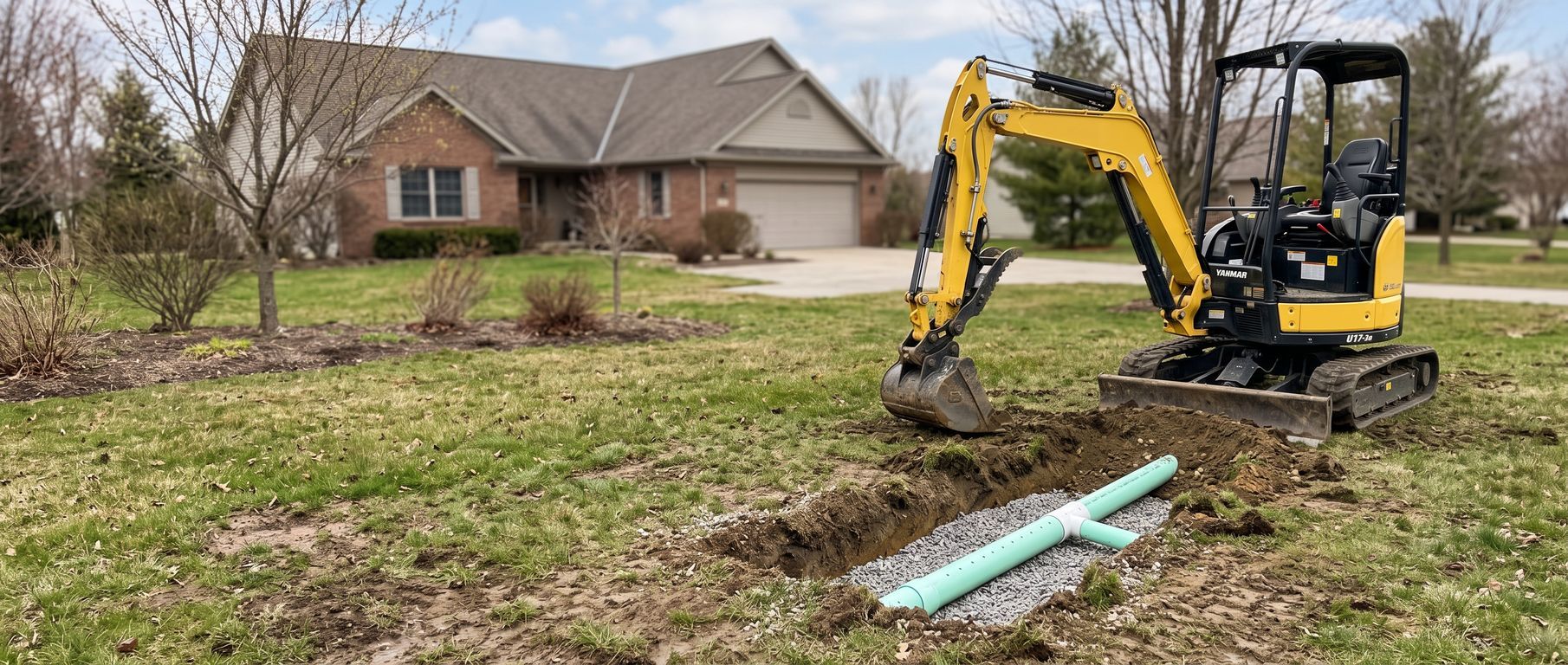
- Sump pits with pumps remove standing water from excavations.
- Proper grading of temporary surfaces directs water toward designated collection points rather than letting it pool.
- Silt fencing and sediment controls aren't just good practice — they're typically required by your erosion control permit.
Equipment Selection
Not all machines handle mud equally.
- Wide-track or low-ground-pressure (LGP) excavators float better on soft ground.
- Rubber-tracked machines cause less surface damage than steel tracks on finished or semi-finished areas.
- Articulated dump trucks outperform rigid-frame trucks in soft conditions thanks to better weight distribution and maneuverability.
Protecting Work Quality
Even with good access and drainage, wet conditions can compromise the work itself.
- Don't compact wet fill. It may pass a quick visual check but will settle dramatically once it dries. Wait for the right moisture content.
- Stockpile dry backfill material under tarps so you have usable fill even after a rain event.
- Test soil before placing structural fill. A simple hand test or proctor test tells you whether conditions are acceptable for compaction.
Crew Safety
Mud makes everything more dangerous. Slippery surfaces, unstable trench walls, and limited visibility are all heightened risks.
- Require proper footwear — steel-toe boots with aggressive tread.
- Re-evaluate trench stability after every rain event.
- Keep first-aid and spill kits accessible — not buried behind equipment on a soggy staging area.
The bottom line: You can't control the weather, but you can control how your site responds to it. A proactive approach to mud management keeps projects on track and protects your reputation for quality work.
You might also like