Spring Grading and Drainage — How to Protect Your Property from Water Damage
Spring is when water problems reveal themselves. Snowmelt, heavy rains, and saturated ground expose every weakness in your property's drainage — water pooling against foundations, soggy yards, flooded basements, and erosion along slopes. The good news: most of these problems are fixable with proper grading and drainage work. It's one of the most common calls Precision Dig Excavation receives every spring.
Why Grading Matters
Grading is the slope of the ground around your home or building. When grading is done correctly, water flows away from structures and toward designated drainage areas — swales, ditches, storm drains, or dry wells. When grading is wrong, water flows toward your foundation, and the consequences range from annoying (perpetually wet basement) to catastrophic (structural damage and mold).
The general rule of thumb is a minimum of six inches of fall over the first ten feet away from a foundation. Many properties — especially older ones — have settled over time and no longer meet this standard.
Common Spring Drainage Problems
- Negative grading — The ground slopes toward the building instead of away from it, often due to soil settlement or poorly placed landscaping.
- Downspout discharge too close to the foundation — Gutters collect a huge volume of water. If downspouts dump it right next to the house, you're creating your own flood.
- Blocked or nonexistent swales — Swales are shallow channels designed to direct surface water. They get filled in over time by landscaping, sod, or settling.
- High water table — In some areas, the spring water table rises high enough to push water up through basement floors and into crawlspaces. This requires more aggressive solutions.
- Compacted soil — Heavy clay soil or areas compacted by foot traffic and vehicles don't absorb water well, leading to pooling and runoff.
Solutions an Excavation Contractor Can Provide
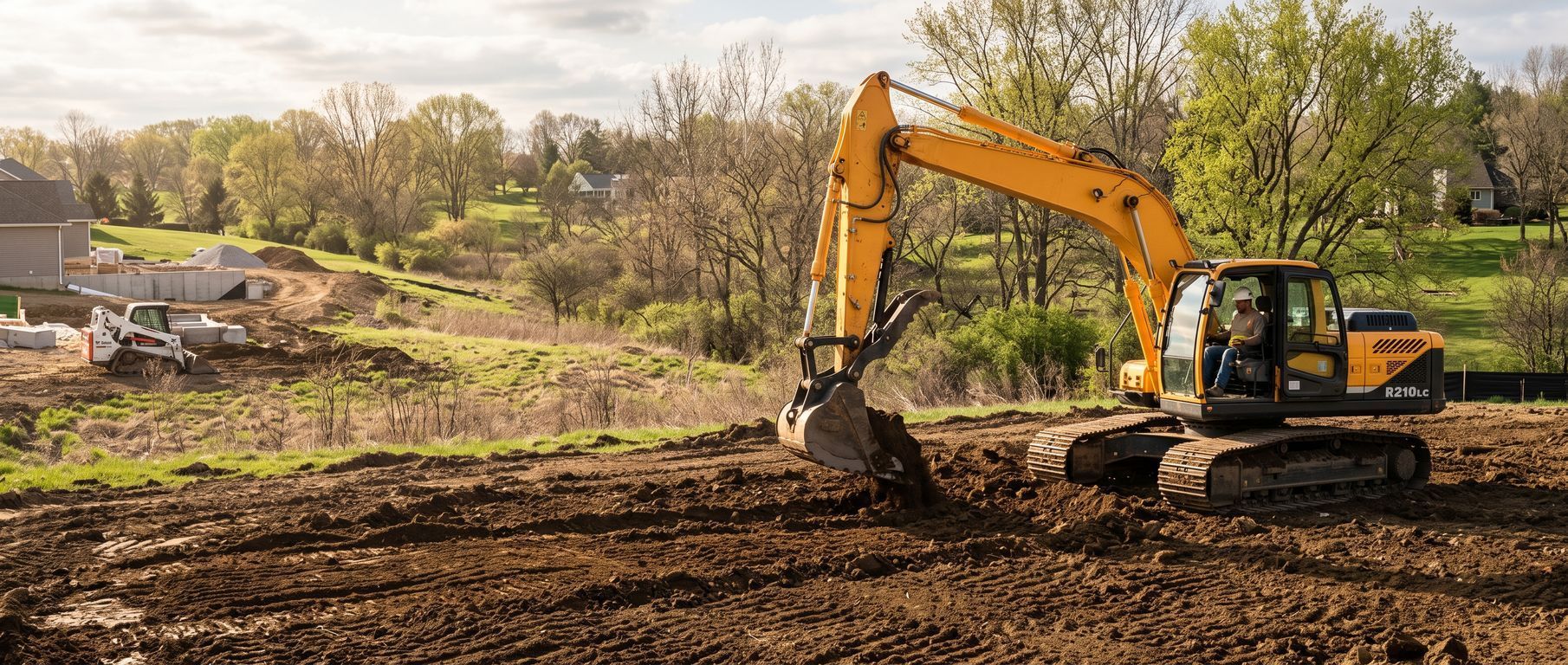
- Regrading — Reshaping the ground surface around your home to restore proper slope. This is often the simplest and most cost-effective fix.
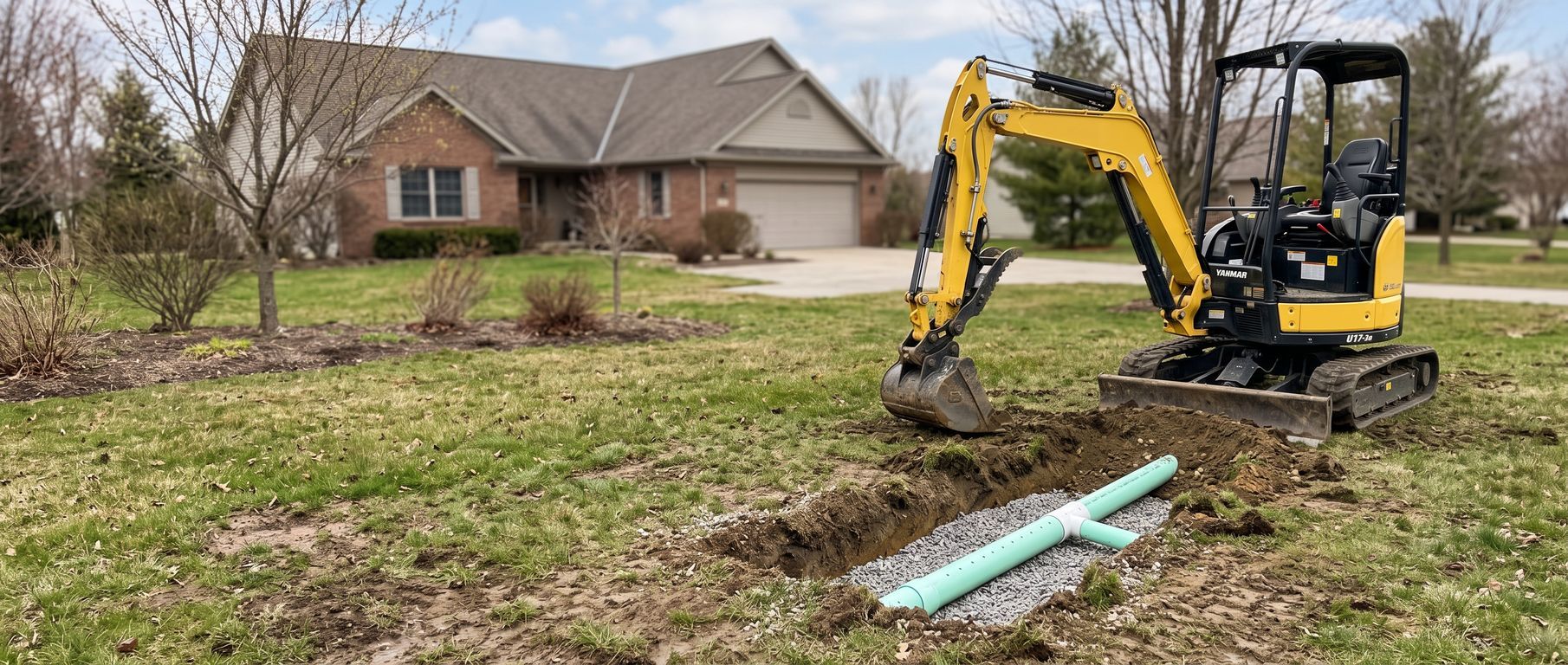
- French drains — A perforated pipe buried in a gravel-filled trench that collects subsurface water and redirects it away from problem areas.
- Curtain drains — Similar to French drains but designed to intercept groundwater moving laterally through a slope before it reaches your home.
- Swale construction — Grading shallow channels to direct surface water to appropriate outlets.
- Dry wells — Underground chambers that collect runoff and allow it to percolate slowly into the soil.
- Downspout extensions and underground piping — Routing gutter discharge well away from the foundation through buried PVC or corrugated pipe.
When to Act
If you see water problems in spring, don't wait until fall to fix them. The issue will only worsen as seasons cycle. Spring is actually an excellent time to do drainage work because you can observe the problem in real time and verify that the solution works before the contractor leaves.
The bottom line: Water is the number-one enemy of buildings and foundations. A few hours of excavation work to correct grading and drainage can prevent tens of thousands of dollars in water damage. If your yard turns into a lake every spring, give Precision Dig Excavation a call — it's one of the most impactful fixes we do.
You might also like