Is Your Septic System Ready for Spring? Signs You Need Excavation Work
Spring is tough on septic systems. The ground is saturated, water tables rise, and systems that were barely keeping up through the year can fail when conditions shift. Precision Dig Excavation handles septic-related excavation work year-round, but spring is when our phone rings the most. Here's how to spot trouble early — and when to call in a contractor.
Why Spring Stresses Septic Systems
A septic system depends on the drain field (also called a leach field) to absorb and filter effluent from the tank. In spring, the soil around the drain field is already full of water from snowmelt and rain. That means the system has less capacity to do its job. If your system was marginal to begin with — due to age, undersizing, or soil conditions — spring is when it shows.
Warning Signs to Watch For
- Slow drains throughout the house — If every sink, shower, and toilet is draining sluggishly, the issue is likely at the septic level, not in your interior plumbing.
- Sewage odor in the yard — A sulfur or sewage smell near the tank or drain field area is a clear sign that effluent isn't being properly absorbed.
- Standing water or unusually green grass over the drain field — Effluent surfacing is a health hazard and a sign the system is overwhelmed.
- Sewage backup into the home — The most urgent sign. If wastewater is coming back into your lowest drains, the system is failing.
- Gurgling sounds in plumbing — This can indicate a full tank or a blockage between the house and the tank.
When Pumping Isn't Enough
A septic pump-out is basic maintenance, and it may temporarily relieve symptoms. But if the problem is in the drain field — crushed pipes, root intrusion, bio-mat clogging, or a failed soil absorption area — pumping the tank is just a band-aid.
This is where excavation comes in.
Excavation-Level Septic Work
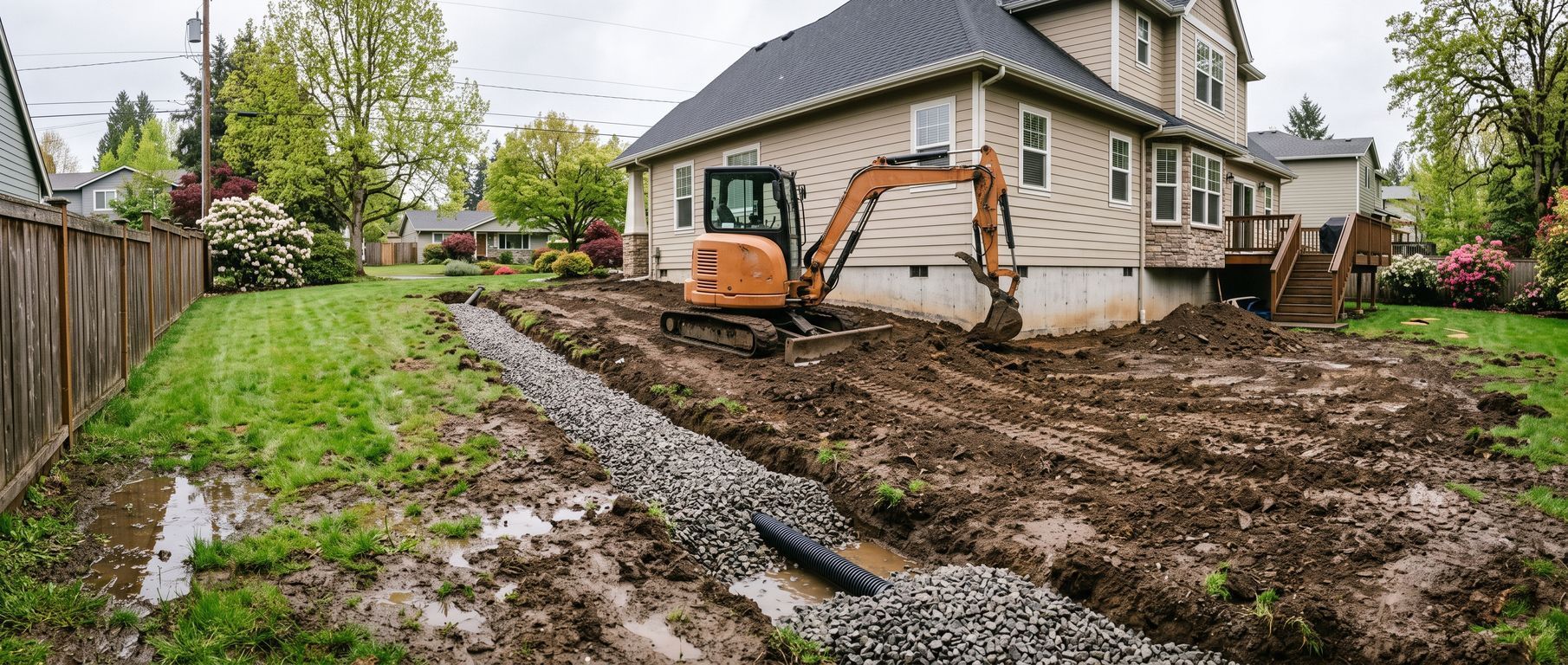
- Drain field replacement — Installing a new set of distribution pipes and absorption trenches. This requires significant excavation, new stone, and pipe.
- Tank replacement — Older concrete tanks can crack, collapse, or lose structural integrity. Excavating and replacing the tank is a major project but sometimes necessary.
- System relocation — If the existing drain field site has failed due to soil conditions or water table issues, a new location on the property may be needed.
- Pump chamber or dosing system installation — Upgrading a gravity system to a pressure-dosed system requires excavation to install a pump chamber and new distribution network.
- D-box (distribution box) repair or replacement — The distribution box divides effluent evenly among drain field lines. If it's damaged or tilted, the field won't function properly.
Permitting and Inspections
Septic work almost always requires a permit from your local or county health department. A soil evaluation (perc test) may be required for new drain field installations. Your excavation contractor should be experienced with the permitting process in your area and coordinate inspections at each required stage.
The bottom line: Don't ignore spring septic warning signs. A failing system won't fix itself — and the longer you wait, the more expensive and disruptive the repair. Catching it early in spring gives you the full construction season to get it resolved before winter.
You might also like